
Operation Cannonshot: The 48th Highlanders and the Liberation of Apeldoorn
In April 1945, the 48th Highlanders of Canada transitioned from the rugged mountains of Italy to the flat, canal-crossed terrain of the Netherlands. Their tactical approach during Operation Cannonshot was defined by a rapid amphibious crossing, fluid maneuver warfare, and a critical intelligence breakthrough that preserved the city of Apeldoorn from destruction.
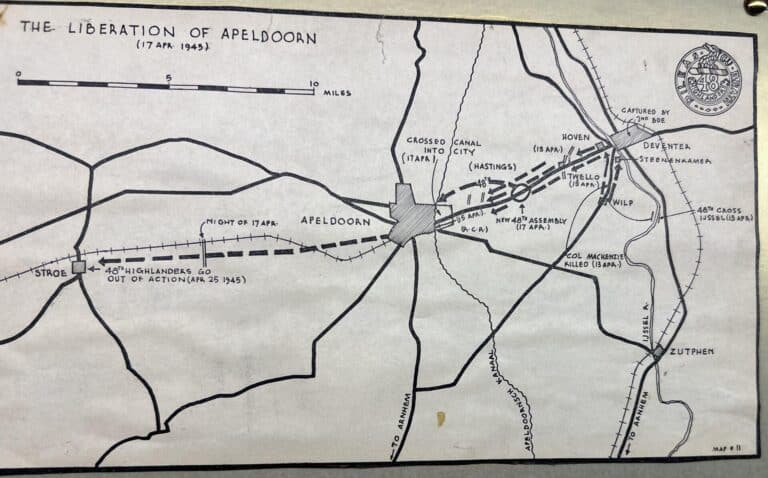
1. The Amphibious Assault: Crossing the IJssel (April 11)
The operation commenced at 16:30 hours near the village of Wilp. This was a mechanized waterborne assault, a sharp departure from the mountain warfare the unit had mastered in Italy.

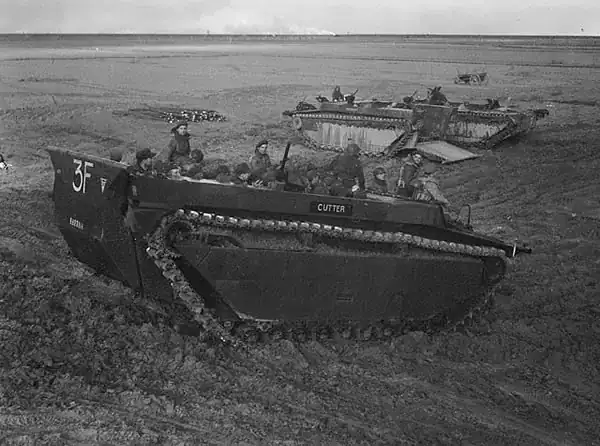
LVT-4 Buffalo The Buffalo LVT-4: The 48th utilized the Buffalo LVT-4 (Landing Vehicle Tracked) to cross the 100-yard wide IJssel River. These amphibious workhorses were equipped with a revolutionary rear-opening ramp, allowing the Highlanders to roll Bren gun carriers and anti-tank guns directly onto the riverbank.
- Tactical Surprise: The crossing took only seven minutes. By striking at Wilp, the Canadians bypassed heavier German defences at Deventer, achieving total tactical surprise and securing the “De Kribbe” and “De Weerd” farms as initial bridgeheads.
2. The Advance through the “Achterhoek” (April 12–14)
Following the crossing, the 48th spearheaded the 1st Brigade’s push westward along the Apeldoorn–Deventer railway axis.
- Beal’s Heroism: Near Wilp, Able Company was pinned down by devastating machine-gun fire. Captain George “Geordie” Beal performed a legendary “mad 200-yard crawl” under direct fire to reach his lead section. He then led a bayonet charge across 150 yards of open ground, personally capturing 18 prisoners and clearing the route. He was later awarded the Military Cross.
- A tragic Loss: On April 12, while scouting a tank route through muddy dykes, the battalion’s Commanding Officer, Lieutenant-Colonel Donald Mackenzie, was killed by a sudden German artillery concentration. The loss of the 30-year-old veteran was a heavy blow; command passed to Major James Counsell.
- Tactical Setback: On April 14, an attempt to seize the Broeksbrug bridge in a “single run” failed when German engineers demolished the structure just 50 meters before Canadian tanks could reach it.
3. Maneuver and Dutch Intelligence (April 15–16)
As the 48th reached the outskirts of Apeldoorn, the strategy shifted to avoid a bloody urban battle. While the 1st Division pressured from the east, the 5th Canadian Armoured Division swung west to close a “trap.”
- The Resistance Breakthrough: On the night of April 16, a Dutch Resistance leader named Gijs Numan risked his life to cross the canal. He brought vital intelligence: the German defenders, fearing encirclement, had abandoned their positions under the cover of darkness.
- Strategic Deception: Initially skeptical, the Canadians realized the intelligence was accurate when Numan returned with captured German stragglers. This information allowed the Canadians to cancel a massive planned artillery bombardment, sparing the historic city from total devastation.
4. Entering the City and the Final Pursuit (April 17)
On the morning of April 17, the 48th Highlanders entered northern Apeldoorn. What was expected to be a brutal street fight became a celebratory procession.
- Urban Mopping Up: While the main German force had retreated, “Dog Company” engaged in a “grievous slog,” clearing remaining snipers and stragglers from the residential blocks to ensure civilian safety.
- The Flying Column: The Highlanders did not linger for the victory celebrations. They immediately formed a “flying column”—a fast-moving motorized group—that raced 70 miles in just five hours to reach Harderwijk. This rapid exploitation successfully cut off the German retreat toward the IJsselmeer (Zuiderzee), effectively ending organized resistance in the sector.
Remembrance and Legacy
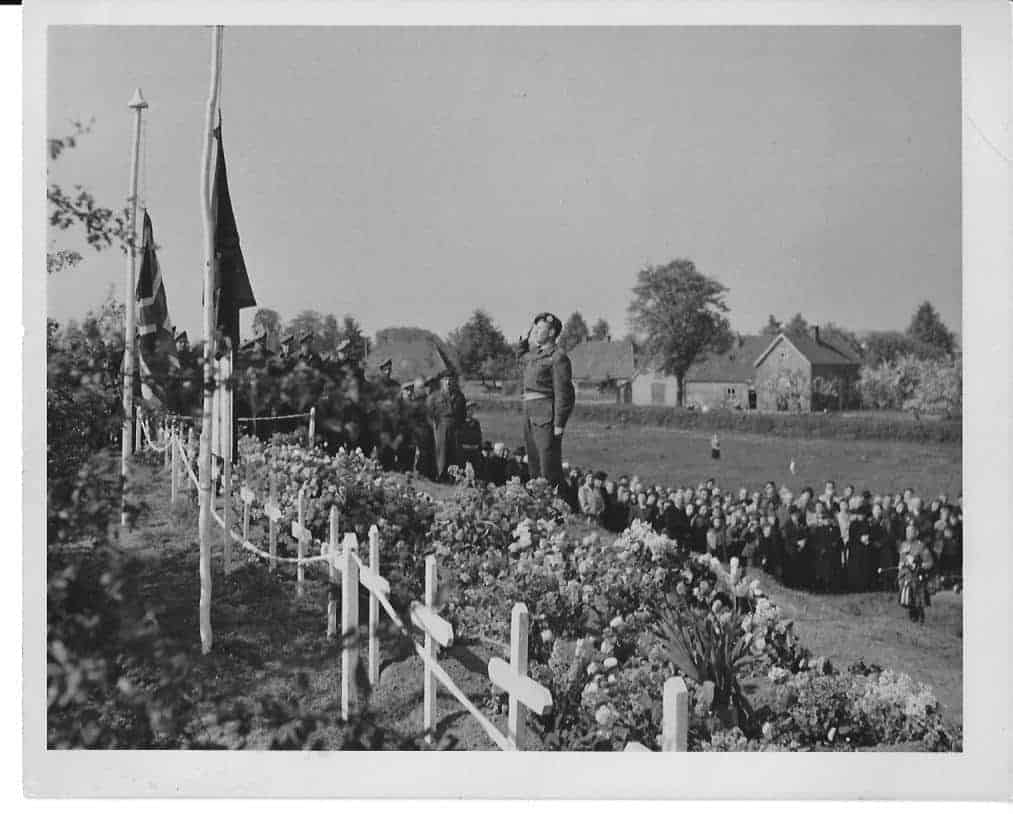
The 48th Highlanders lost 19 men during Operation Cannonshot. Initially buried at a dyke in Wilp, the fallen were tended to with an “impressive array of flowers” by the local Dutch population—a tradition of gratitude that remains a cornerstone of the bond between the Regiment and the people of Apeldoorn today.
Canada and the Liberation of Apeldoorn | The Canadian Encyclopedia
The 48th Highlanders and Operation CANNONSHOT